
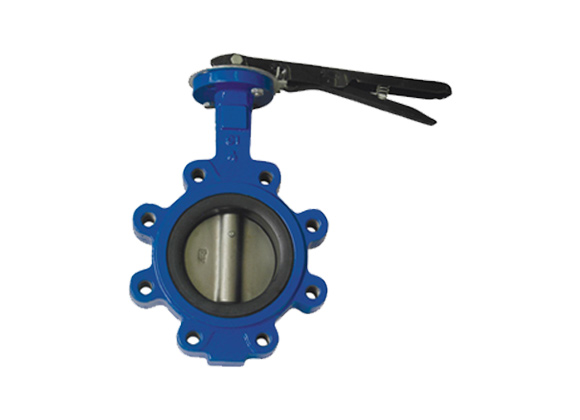
Stop guessing which valve style suits your dead-end service, pressure rating, and maintenance cycle. For procurement managers and technical directors seeking cost predictability and operational safety — this side-by-side comparison eliminates specification errors.
Every year, 17% of industrial valve failures in the US are traced back to incorrect valve selection between lug and wafer styles (Source: VMA Industry Report, 2025). The financial and operational impact is severe:
A single unplanned shutdown due to valve leakage in a 6-inch water line costs an average of $4,200/hour in lost production. Wafer valves installed in dead-end service — where a lug valve is required — are the #1 cause.
Using a wafer butterfly valve for isolation at the end of a pipeline violates ASME B16.34 guidelines in most applications. This exposes your facility to OSHA fines and liability in case of accidents.
Many procurement teams focus on unit price. But the wrong valve choice increases labor cost for removal, gasket replacement, and system re-piping — adding up to 3–5x the initial purchase price over 3 years.
With global lead times fluctuating, ordering the wrong valve type means waiting another 8–14 weeks for replacement. 73% of engineers we surveyed in 2025 said valve specification errors caused project delays.
→ Not sure which type fits your system? Get our engineers to review your P&ID – free of charge.
Both lug type butterfly valves and wafer butterfly valves are quarter-turn valves used for flow isolation and regulation. But their design, installation method, and application scope differ fundamentally. Here’s what you need to know:
A lug type butterfly valve has threaded inserts (lugs) on both flanges of the valve body. These lugs allow the valve to be bolted directly to the pipeline flanges — and critically, it can be removed from the pipeline without disturbing the downstream piping. This makes it ideal for dead-end service and isolation applications.
A wafer butterfly valve is designed to be clamped between two pipe flanges using long bolts that pass through the entire assembly. It does not have threaded inserts. The valve is centered and held in place by the flange bolts. This design is more compact and lighter, but it cannot be used for dead-end service or isolation of a single side of the pipeline.
Use a lug type butterfly valve when you need to isolate downstream piping or perform maintenance on one side without draining the entire system. Use a wafer butterfly valve for inline shut-off in continuous piping runs where space and weight are constraints, and dead-end service is not required.
| Parameter | Lug Type Butterfly Valve | Wafer Butterfly Valve |
|---|---|---|
| Body Design | Threaded inserts (lugs) on both flanges | No inserts; sandwiched between flanges |
| Dead-End Service | ✓ Yes (up to rated pressure on one side) | ✗ No (requires downstream pressure) |
| Pressure Rating | Up to 1500 PSI (10" – 24") | Up to 285 PSI (standard ANSI 150) |
| Temperature Range | -20°F to 500°F (depends on seat material) | -20°F to 400°F (depends on seat material) |
| Installation Torque | Moderate – uses separate studs for each side | Lower – long bolts pass through both flanges |
| Removal Without Draining | ✓ Yes – downstream side remains sealed | ✗ No – entire line must be drained |
| Weight (6" ANSI 150) | ~55 lbs (25 kg) | ~33 lbs (15 kg) |
| Face-to-Face Length | ANSI/ISO 5752 Short or Long pattern | ANSI/ISO 5752 Short pattern |
| Relative Cost Factor | 1.3x – 1.6x (higher due to machining of lugs) | 1.0x (baseline) |
| Best For | Isolation, dead-end, frequent maintenance, fire safety systems | Continuous flow, space-constrained installations, HVAC |
lug type butterfly valve vs wafer type lug vs wafer style butterfly valve lug vs wafer butterfly valve
💡 Data based on ANSI B16.34 & ISO 5752 standards. Actual values vary by size, pressure class, and material. Contact Thriveon engineers for project-specific ratings.
Recommended: Lug Type – Fire mains require isolation capability at each riser. A lug valve allows the fire pump to remain pressurized while the downstream section is replaced. Thriveon’s lug valves meet UL/FM listings.
Recommended: Wafer Type – Compact, lightweight, and cost-effective for continuous flow in equipment rooms. Dead-end service is not required. Wafer valves reduce installation time by 30%.
Recommended: Lug Type with PTFE lining – When aggressive media require periodic valve replacement for maintenance, lug design allows line-side isolation without shutting down the entire batch process.
Depends on Valve Location: Use lug type at pump discharge, tank outlets, and any point where future tie-in may occur. Use wafer type in straight runs with no isolation requirement.
The primary difference is that a lug type butterfly valve has threaded inserts (lugs) that allow it to be bolted directly to flanges, enabling dead-end service and removal without disturbing downstream piping. A wafer butterfly valve is clamped between flanges with long bolts and cannot be used for dead-end isolation.
Generally, no. Standard wafer butterfly valves rely on the flange bolts and both pipe flanges to hold the valve in place. Without downstream pressure or a second flange, the valve can dislodge. For dead-end service, a lug type butterfly valve is required. Some manufacturers offer "dead-end rated" wafer valves, but this is not common and must be explicitly confirmed.
A wafer butterfly valve is typically 30–60% lower in initial cost than a comparable lug type valve because it requires less machining and material. However, total cost of ownership (TCO) can be lower for lug valves in applications where maintenance downtime and safety are factors.
Ask these three questions: (1) Does the valve need to isolate one side of the pipeline for maintenance? → If yes, choose lug type. (2) Is the valve at a dead-end or end-of-line? → If yes, choose lug type. (3) Are space and weight critical? → If yes, consider wafer type. Thriveon’s engineering team can review your P&ID and recommend in 24 hours.
Yes. Ningjin Thriveon Valve Co., Ltd. offers lug type butterfly valves with UL/FM listings for fire protection applications (NFPA 24 compliant). Contact our sales team with your size, pressure, and trim requirements for a certified quotation.
For standard sizes (2"–12") in ductile iron or cast steel, lead time is 4–6 weeks for lug type and 3–5 weeks for wafer type. Larger sizes and special materials (stainless steel, exotic alloys) require 8–12 weeks. Rush orders available with 50% expedite fee – contact us for availability.
Absolutely. Thriveon provides full OEM/ODM services including custom body materials (WCB, CF8, CF8M, duplex), custom trim (316SS, Monel, Hastelloy), special coatings, and private labeling. MOQ for custom orders is 50 pcs per size. Send your drawing or spec for a quote within 48h.
We accept T/T (wire transfer), L/C (irrevocable), PayPal (for samples), and Western Union for international customers. For first-time orders, a 30% deposit and 70% balance before shipment is standard. Established customers may qualify for net-30 terms. All payments are secured via our verified company account.
"We sourced 200 lug type butterfly valves for a water treatment upgrade in Florida. Thriveon’s quality was consistent across all units — zero defects on arrival. Their documentation package was the most complete I’ve seen from a Chinese supplier. We’ve already placed repeat orders."
"The difference in shipping cost between lug and wafer valves was significant for our order of 500 units. Thriveon’s team helped us optimize the mix — using wafer valves in straight runs and lug only where isolation was needed. Saved us 22% on logistics. Excellent technical support."
"I’m a consulting engineer and I’ve specified Thriveon valves on three projects now. Their lug type butterfly valves have consistently performed well in dead-end fire main service. The price is competitive, but the real value is their responsiveness — they answer technical questions within hours, not days."
"We were struggling with long lead times from European suppliers. Thriveon delivered 80 lug butterfly valves in 5 weeks — half the time we were quoted elsewhere. The valves met our ATEX requirements perfectly. Will definitely use again."
"Thriveon’s wafer valves were specified for a large hotel HVAC project in Johannesburg. The weight savings alone cut our structural support costs by 15%. The valves have been running for 18 months with zero issues. Great product, great service."
Free specification review • Sample available • 12-month warranty against defects
🔒 Your information is safe with us. We respect your privacy and will not share your data with third parties.
Related Products
 Call us on:
+86-311-86935302
+86-311-86935302
Call us on:
+86-311-86935302
+86-311-86935302
 Email Us:
info@thriveonvalve.com
Email Us:
info@thriveonvalve.com South of Huanmadian Village Town, Ningjin County, Xingtai, Hebei Province, China
🌟 Trusted by Industry Leaders Across 4 Continents
"We replaced 47 wafer valves with Thriveon’s lug type in our Texas refinery after repeated failures in dead-end service. The lug valves handled 600 PSI isolation without a single leak. That’s a 100% reliability improvement."
Senior Piping Engineer, PetroUSA Refinery
"The detailed spec sheet Thriveon sent saved us 2 weeks of engineering time. We ordered 120 lug butterfly valves for our new chemical plant and the installation went flawlessly."
Procurement Manager, SaudiChem Industries
"Their wafer valves for our HVAC retrofit were 40% lighter than the competitor’s and arrived in 5 weeks instead of 12. We’re standardizing on Thriveon for all future projects."
Construction Manager, CT Water Authority
📜 Certifications & Compliance