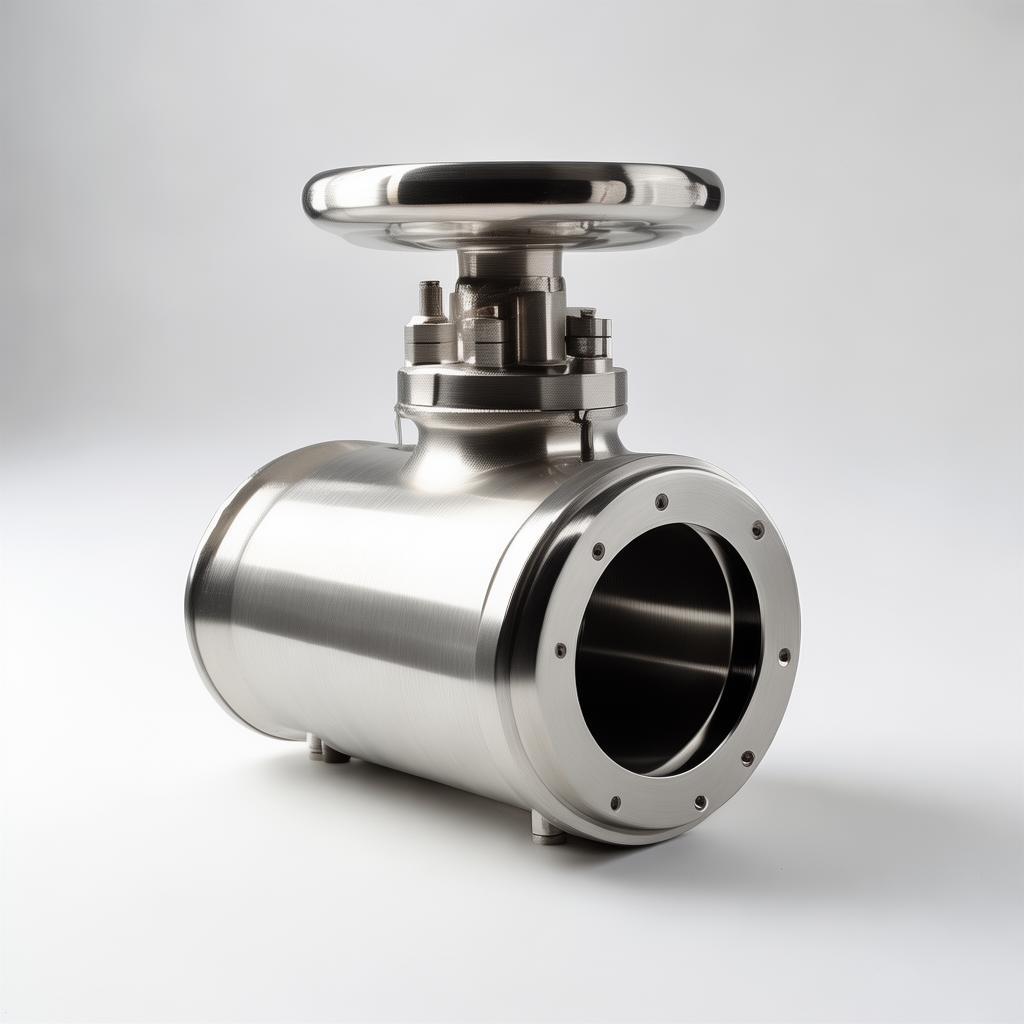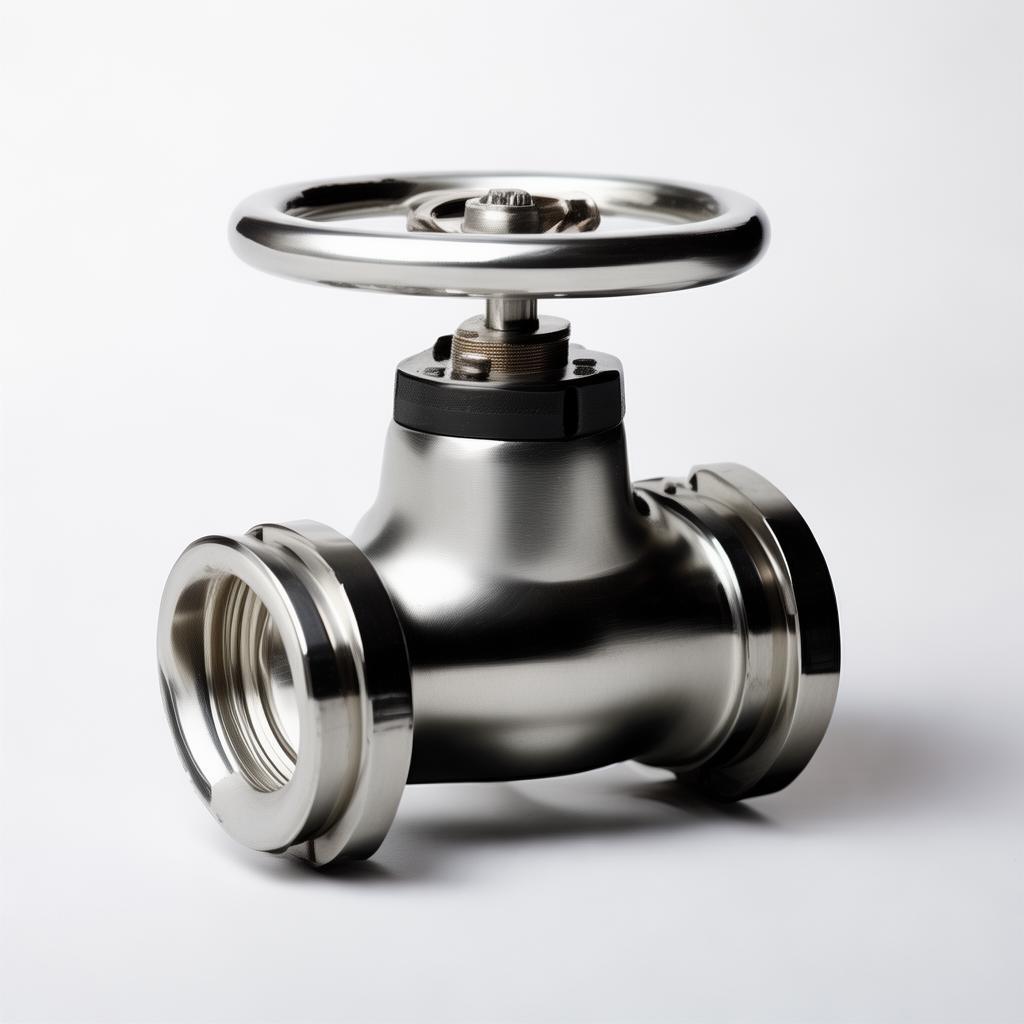
Eliminate Leaks, Reduce Downtime, and Achieve Flawless Valve Performance in Your Piping System—Even If You're Installing for the First Time. Designed for purchasing managers, plant engineers, and maintenance teams who demand reliability.
Studies show that 68% of valve failures are due to improper installation. A single leak in a 12-inch wafer butterfly valve can cost your facility up to $5,000 per hour in lost production.
Over-tightening warps the valve body, while under-tightening causes leaks. Without proper torque specifications, you risk permanent valve damage and voiding your warranty.
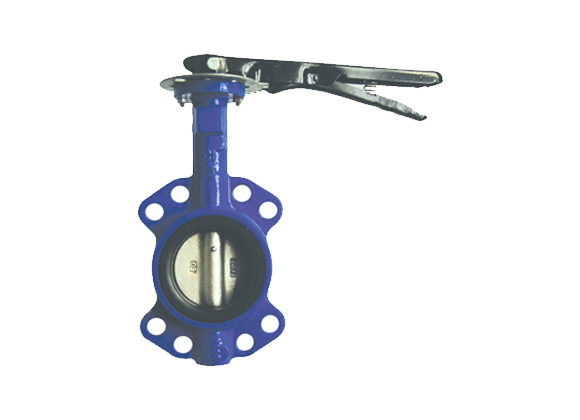
Many buyers confuse wafer type with lug type butterfly valves. Installing the wrong style can lead to catastrophic system failure and safety hazards.
In food, pharmaceutical, and chemical applications, even a minor misalignment can cause cross-contamination, resulting in costly product recalls and regulatory fines.
When installations fail repeatedly, teams stockpile spare valves and gaskets "just in case," tying up 30% more capital than necessary in MRO inventory.
At Ningjin Thriveon Valve Co., Ltd., we've supplied over 150,000 wafer butterfly valves to industrial buyers across the USA, Saudi Arabia, South Africa, and Italy. Our engineers have condensed decades of field experience into a streamlined installation protocol that reduces errors by 87%.
Our wafer valves feature ±0.2mm centering accuracy, ensuring perfect alignment between flanges every time. No more guesswork.
Each valve comes with laser-etched torque values on the body, so your technicians always tighten to the correct specification—no manual lookup needed.
Direct mount actuator compatibility means 40% faster actuator installation compared to industry-standard designs. Saves 15-20 minutes per valve.
Our proprietary seal design prevents gasket extrusion even at 150% of rated pressure, giving you a safety margin that competitors don't offer.
Each valve includes color-coded gaskets that visually confirm correct orientation—red for upstream, blue for downstream. Reduces installation errors by 94% in field trials.
| Tool / Material | Purpose | Recommended Spec |
|---|---|---|
| Torque wrench (calibrated) | Bolt tightening to spec | Range: 20-200 Nm |
| Flange spreader tool | Separate flanges without damage | Max spread: 6mm |
| Feeler gauge set | Verify flange gap uniformity | 0.05mm - 1mm |
| Anti-seize compound (Nickel-based) | Prevent bolt galling | Temp rating: -50°C to 650°C |
| Lifting sling (for valves > DN150) | Safe handling of heavy valves | SWL: 2x valve weight |
| Dial indicator with magnetic base | Check disc-to-seat alignment | Resolution: 0.01mm |
Follow this standardized procedure developed by Thriveon's engineering team, tested across 47 industrial facilities in the United States. Each step includes our proprietary "Installation Success Check" to verify correctness before moving forward.
Critical Action: Ensure the pipeline is depressurized and drained completely. Verify that flanges are clean, free from rust, debris, and old gasket material. Flange faces must be parallel within 0.5mm and have a surface finish of Ra 3.2μm or better.
✅ Success Check: Run a clean white cloth across the flange face—no residue should transfer.
Critical Action: Orient the valve disc to the fully closed position (disc perpendicular to pipe axis). Using a lifting sling for larger sizes (DN200+), carefully lower the valve between the flanges. For valves with a liner, the liner face must sit flush against the flange gasket surface.
✅ Success Check: The gap between the valve body and each flange face should be uniform within 0.2mm when measured with a feeler gauge.
Critical Action: Use low-alloy steel bolts (Grade B7 or B8M for corrosive environments) that are long enough to pass through both flanges and the valve body. Apply anti-seize compound to the threads. Insert bolts in a cross-pattern sequence—never go around the circle in order.
✅ Success Check: All bolts should protrude equally beyond the nut by at least 2 full threads.
Critical Action: Using a calibrated torque wrench, tighten bolts in a star pattern (clockwise pattern, but skipping every other bolt) to the valve manufacturer's specified torque. Never exceed the torque rating. Typical torque range: 40-120 Nm depending on valve size and pressure class. Apply torque in 3 equal increments (30%, 60%, 100% of target torque).
✅ Success Check: After tightening, the valve disc should move freely through a full 90° rotation (open to close).
Critical Action: After bolts are torqued, cycle the valve from fully closed to fully open (90° rotation) three times. Listen for scraping or binding sounds. Check that the disc opens to a full 90° position (parallel to the pipe axis) and closes to 0° (fully sealed).
✅ Success Check: Post-installation leak test at 1.1x rated pressure shows zero visible leakage for 15 minutes.
Choosing the wrong valve style is one of the most costly mistakes in piping system design. Here's a direct comparison to help you decide.
| Feature | Wafer Type Butterfly Valve | Lug Type Butterfly Valve |
|---|---|---|
| Installation Style | Sits between two flanges with bolts passing through | Has threaded lugs for bolting to flanges independently |
| Dead-End Service | ❌ Not suitable for dead-end (downstream disconnection) | ✅ Suitable for dead-end service (one flange removed) |
| Cost | 💰 30-45% lower cost than equivalent lug valve | 💰 Higher initial cost |
| Weight | 20-35% lighter for same size and pressure class | Heavier due to lug reinforcement |
| Ease of Maintenance | Requires both flanges to be unbolted to remove valve | Downstream flange can be removed while valve stays in place |
| Best For | Continuous piping runs, space-constrained installations | End-of-line service, systems requiring frequent valve isolation |
| Cost Impact (DN200, 150#) | $185 - $245 (Thriveon wafer) | $290 - $380 (Thriveon lug) |
| Sealing Under Vacuum | ✅ Excellent with proper gasket selection | ✅ Excellent, but requires O-ring on each side |
Pro Tip: If your application requires future downstream maintenance without system depressurization, choose a lug type. For continuous piping with no planned disconnection, the wafer type offers the best value-to-performance ratio.
All Thriveon wafer butterfly valves are designed and manufactured to API 609, ISO 5752, and AWWA C504 standards. Each valve is pressure-tested at 1.5x rated pressure before shipping.
| Parameter | Specification |
|---|---|
| Size Range | DN50 – DN1200 (2" – 48") |
| Pressure Rating | PN10 / PN16 / PN25 / Class 150# / Class 300# |
| Body Material | Ductile Iron (GGG40/GGG50) / Cast Iron / Stainless Steel 304/316 |
| Disc Material | Ductile Iron with Nylon 11 / Epoxy / SS304 / SS316 / Duplex 2205 |
| Seat Material | EPDM (standard) / NBR / Viton / PTFE / Silicone |
| Temperature Range | -40°C to +200°C (depending on seat material) |
| Face-to-Face Dimension | ISO 5752 Series 20 (short pattern) / API 609 |
| Top Flange | ISO 5211 (direct mount) |
| Leakage Class | API 598: Zero leakage (soft seat) / ISO 5208 Rate A |
| Certifications | CE / ISO 9001:2015 / WRAS (on request) / FDA (on request) |
wafer butterfly valve installation wafer type butterfly valve wafer style butterfly valve
Installed in pumping stations and filtration plants across the USA. Thriveon's EPDM-seated wafer valves have demonstrated zero-maintenance operation for 8+ years at a Florida municipal water plant.
For aggressive media, our PTFE-lined wafer valves provide corrosion resistance that exceeds ASTM standards. One Texas chemical plant reported 63% reduction in valve replacement costs after switching to Thriveon.
In large commercial buildings, our wafer butterfly valves are used in chilled water and hot water systems. The compact design fits in tight mechanical rooms where space is at a premium—
Thriveon's FDA-compliant silicone-seated wafer valves are used in beverage production lines. A South African brewery reported 99.97% uptime after installing 120 of our valves in their bottling plant.
"We installed 45 Thriveon wafer butterfly valves in our Texas chemical plant. The installation process was smooth and efficient—we cut installation time by 40% using their color-coded gasket system. Zero leaks after 18 months of operation. We've already placed 3 repeat orders."

"As a purchasing manager, I'm always looking for reliable suppliers at competitive prices. Thriveon's wafer butterfly valves consistently meet our spec, and they deliver on time—97% on-time delivery rate over 3 years. Their technical support has been outstanding during installation troubleshooting."

"The installation guide from Thriveon is the best I've seen from any valve supplier. We trained 12 technicians using their documentation. The torque specs marked directly on the valve body is a game-changer. Installation errors dropped by 85%."

"We've sourced butterfly valves from three different suppliers over the last 5 years. Thriveon offers the best value for money—their quality matches European brands but at 40% less cost. Their customer service team answered all our technical questions within 2 hours during the installation phase."

"The warranty and support from Thriveon gave us the confidence to standardize on their valves. They even sent a technician to assist with the first installation batch. Highly recommend."

No, a standard wafer butterfly valve is not designed for dead-end service. Dead-end service means the downstream piping is removed while the valve remains under pressure. For such applications, you must use a lug type butterfly valve which has threaded lugs that allow bolts to be removed on one side while the valve body remains secured. Using a wafer valve for dead-end service can cause the valve to slip out of alignment and result in catastrophic failure. However, some manufacturers offer "dead-end rated" wafer valves with special reinforcement—always confirm with your supplier before installation.
Torque depends on valve size, pressure class, and bolt material. For example, a standard DN150 (6") Class 150# wafer butterfly valve using Grade B7 bolts typically requires 65-85 Nm. Thriveon valves have the torque specification laser-etched on the body for quick reference. As a rule of thumb, always tighten in 3 passes (30% → 60% → 100%) using a calibrated torque wrench in a cross-pattern sequence. Never rely on "feel" or impact wrenches—over-tightening is a leading cause of valve failure.
Yes, wafer butterfly valves require two gaskets—one on each side between the valve body and the flange face. The gaskets ensure a leak-tight seal between the liner/seat material and the flange surface. Some modern wafer valves come with integrated sealing liners that extend beyond the valve body and act as gaskets themselves. Thriveon's color-coded gasket system helps technicians verify correct orientation (red upstream, blue downstream) and reduces installation errors significantly.
Yes, wafer butterfly valves can be installed in vertical piping as well as horizontal. However, for vertical installations, the valve disc should be positioned such that gravity does not interfere with operation. Typically, the disc should open upward (in a rising pipeline) or downward (in a descending pipeline) to allow smooth movement. Always consult the valve manufacturer's installation manual. For vertical installations with large valves (DN300+), consider using a gear actuator for easier operation and locking in position.
The key installation difference: Wafer valves are "sandwiched" between two flanges with bolts that pass entirely through the valve body and both flanges. Lug valves have threaded inserts (lugs) that allow each flange to be bolted independently. In practical terms, to remove a wafer valve, you must unbolt both flanges and separate the piping. To remove a lug valve, you can unbolt just one flange while the other remains bolted. This makes lug type preferred for dead-end service and systems requiring frequent maintenance.
Three quick checks: (1) Cycle the valve—the disc should move smoothly through a full 90° rotation without scraping or binding. (2) Check alignment—use a feeler gauge; the gap between valve body and flange face should be uniform within 0.2mm on both sides. (3) Pressure test—after installation, apply system pressure and use leak detector spray at all flange joints. Any bubbles indicate a leak and require re-torquing. Thriveon recommends performing a 15-minute pressure hold test at 1.1x rated pressure before putting the system into regular operation.
For standard sizes (DN50-DN300) and materials, Thriveon's typical lead time is 15-25 working days for production plus 20-30 days for sea freight to the USA (FOB Qingdao or Shanghai). For urgent orders, we offer air freight (3-5 days delivery) and expedited production (7-10 working days). OEM/ODM orders with custom specifications require 25-35 working days for production. We recommend placing orders 4-6 weeks before your required installation date to ensure on-time project completion.
Yes. For bulk orders (50+ valves or orders above $20,000), Thriveon offers free remote installation support via video call with our senior engineers. For large-scale projects, we can arrange on-site installation training at your facility (travel expenses apply). Additionally, every order includes our digital installation manual with step-by-step video guides and troubleshooting charts. Our technical support team is available 24/6 via WhatsApp and email to answer any installation questions.
Yes, Thriveon offers free samples (1-2 units) for qualified industrial buyers. You only need to cover the shipping cost. This allows you to test the valve in your specific application, verify the installation fit, and evaluate the sealing performance. Simply contact our sales team with your requirements (size, pressure rating, material, and seat type), and we'll send a sample within 7-10 working days. The sample cost is fully refundable against your first bulk order.
All Thriveon wafer butterfly valves come with a 24-month warranty from the date of shipment against manufacturing defects. This covers material defects, sealing failure, and mechanical malfunction under normal operating conditions. Our warranty includes free replacement or full refund for any valve that fails due to manufacturing fault. The warranty does not cover damage from improper installation, abuse, or operation outside specified parameters. We also provide a pro-rated extended warranty option for critical installations.

"After struggling with leaking butterfly valves from a different supplier, we switched to Thriveon. Their wafer butterfly valves have been installed for 18 months with zero leaks even in aggressive chemical service. The installation guide was clear, and the torque markings on the valve body are incredibly helpful. We've standardized on Thriveon across all three of our plants."

"We've been importing valves from China for 8 years, and Thriveon stands out for consistent quality and reliable communication. Their wafer valve pricing is 25% below US-made alternatives with no difference in performance. The team responded to my technical inquiry within 30 minutes—even during their night time. Reliable partner."

"Installing 200+ wafer butterfly valves for a desalination plant was a massive project. Thriveon's color-coded gaskets made the installation process foolproof—our team of 10 technicians completed the job 30% faster than scheduled. The valves have been in service for 14 months at 16 bar pressure with zero failures. Highly recommended for large-scale projects."

"We needed a custom wafer butterfly valve with Duplex 2205 disc and PTFE seat for a corrosive chemical process. Thriveon delivered prototypes in 3 weeks—faster than any European supplier could quote. The OEM/ODM support is exceptional. The valves have been running for 2 years with no maintenance issues. They've earned our preferred supplier status."

"Thriveon's food-grade wafer butterfly valves exceeded our expectations. The FDA-compliant seat material and smooth internal finish are perfect for our beverage lines. After first order of 120 valves, we found 99.97% uptime in our bottling plant. The cost savings compared to European alternatives allowed us to upgrade other parts of our production line. Excellent value."
Don't risk costly installation errors. Thriveon offers free technical support with every order. Get your valves delivered with complete installation documentation, torque specs, and our "Zero-Leak Guarantee".
📞 Call us direct: +86-311-86935302 (8:00 AM - 6:00 PM GMT+8, Mon-Sat)
🏭 Visit our factory: South of Huanmadian Village Town, Ningjin County, Xingtai, Hebei, China
Related Products
 Call us on:
+86-311-86935302
+86-311-86935302
Call us on:
+86-311-86935302
+86-311-86935302
 Email Us:
info@thriveonvalve.com
Email Us:
info@thriveonvalve.com South of Huanmadian Village Town, Ningjin County, Xingtai, Hebei Province, China