Complete Guide to Valve Operation Types: Manual, Electric, Pneumatic & More
For plant engineers, procurement managers, and operations directors who need to select the right actuation method — reducing downtime, cutting costs, and ensuring safety across every line.
📥 Get Expert Consultation in 24 Hours
Why the Wrong Valve Operation Type Hurts Your Bottom Line
Every day, procurement and engineering teams face the same costly dilemma: choosing an actuation method that seems fine on paper but fails in the field. The result? Unplanned shutdowns, skyrocketing maintenance, and safety risks that keep plant managers up at night.
⚠️ 23% Higher Maintenance Costs
According to a 2024 industry benchmark, facilities that mismatch actuator type to application spend nearly a quarter more on repairs. A pneumatic actuator specified for a precision modulating service, for instance, can wear out 3× faster.
⚠️ Manual Valves in Hard-to-Reach Areas
Over 40% of manual valve installations in oil & water lines are located more than 6 feet above floor level, forcing workers to climb ladders or use extension wrenches — a leading cause of ergonomic injuries and slow emergency response.
⚠️ Production Delays from Slow Operation
A single manually operated gate valve on a 12" line can take 8–12 minutes to fully open. In a high-speed bottling or chemical batching process, that delay creates costly bottlenecks.
⚠️ Premature Actuator Failure
Selecting an under-torqued electric actuator for a high-friction valve results in frequent motor burnout. Industry data shows 18% of actuator replacements happen within the first year due to wrong sizing.
You need a clear, technical framework to match valve operation type with your fluid, pressure, safety, and budget requirements. That's exactly what this guide delivers.
Valve Operation Types at a Glance
Valve operation types refer to the method used to open, close, or modulate a valve. The choice affects everything from response time and torque to safety compliance and total cost of ownership. Here are the five main categories every industrial buyer should know:
- Manual (handwheel, gearbox, lever) – lowest cost, labor-intensive.
- Electric actuation – precise, remote-controllable, ideal for multi-turn and quarter-turn valves.
- Pneumatic actuation – fast cycling, explosion-proof, best for on/off & fail-safe services.
- Hydraulic actuation – highest torque density for large-bore valves.
- Solenoid actuation – compact, direct-acting for pilot and instrumentation.
Thriveon Valve supplies butterfly valves, gate valves, globe valves, check valves, ball valves, strainers, and foot valves with any of these operation types — engineered to your pressure class, end connection, and certification needs.
1. Manual Valve Operation
Manual operation uses human force through a handwheel, lever, or gearbox to actuate the valve. It remains the most widely used method for small-bore valves, infrequent cycling, or budget-constrained projects.
Sub-types of Manual Operation
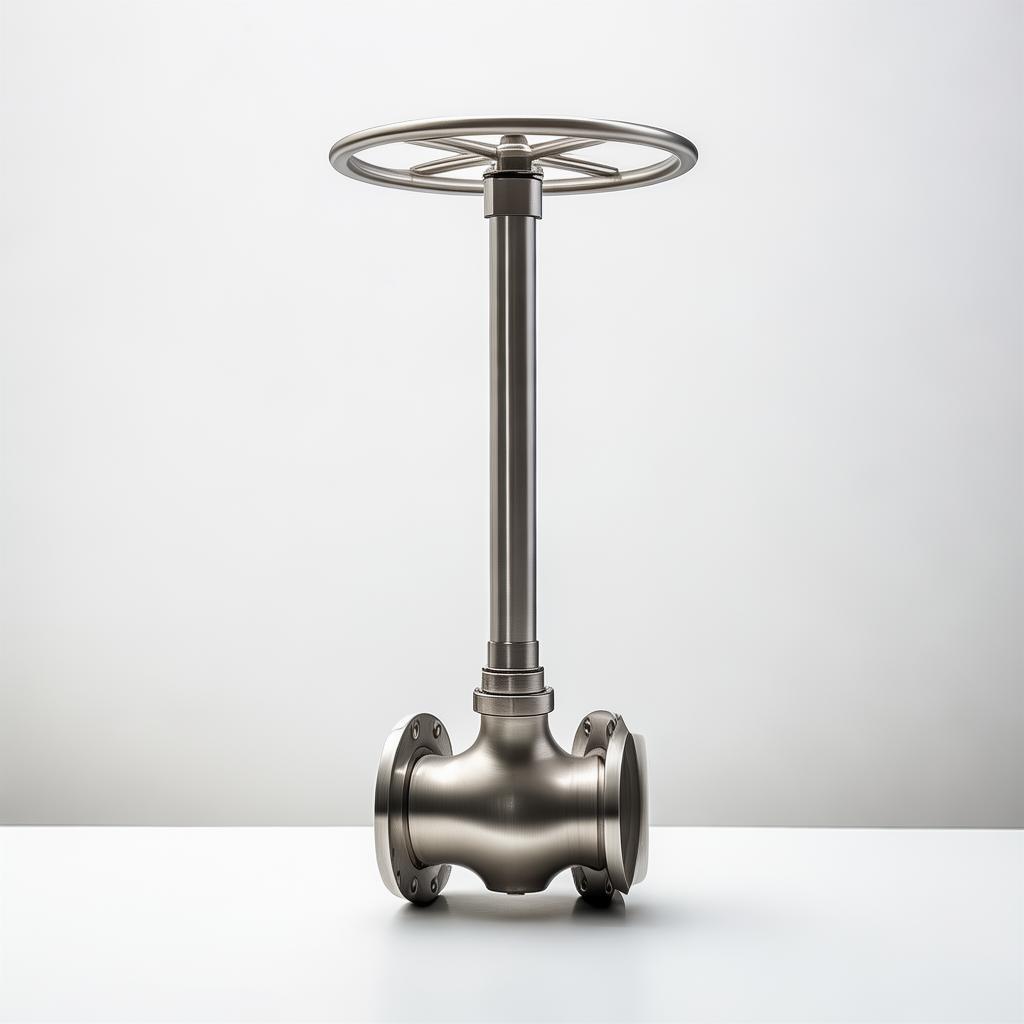
- Handwheel (Multi-turn): Common on gate & globe valves. Provides mechanical advantage via threaded stem. Best for isolation and throttling where speed is not critical.
- Gearbox (Manual Gear Operator): Reduces operating torque by 4:1 or 6:1. Recommended for valves above DN200 (8") or high-pressure classes (600#+).
- Lever / Wrench (Quarter-turn): Used on ball, butterfly, and plug valves. Fast 90° operation — ideal for emergency shut-off.
When to Choose Manual
- ✔ Budget-sensitive projects (savings of 30–50% vs. automated)
- ✔ Valves operated fewer than 5 cycles per shift
- ✔ Accessible locations (floor level or with safe platforms)
- ✔ Hazardous areas where electric actuators require expensive explosion-proof enclosures
Thriveon offers manual gate, globe, check, and butterfly valves with cast iron, ductile iron, or stainless steel bodies — all available with handwheel, gearbox, or lever options.
2. Electric Valve Actuation
Electric actuators convert electrical energy into mechanical torque to operate valves remotely. They deliver precise modulating control, data feedback, and integration with PLC/DCS systems — making them the top choice for water treatment, HVAC, and process industries.
Key Benefits
- Remote control & automation: No manual intervention needed; ideal for hazardous or confined spaces.
- Modulating capability: 4–20 mA, 0–10 V, or digital bus (Profibus, Modbus) for accurate position control.
- Fail-safe options: Battery backup or spring-return for safety-critical lines.
- Data monitoring: Torque sensing, position feedback, cycle count — enables predictive maintenance.
Common Electric Actuator Types
- Quarter-turn electric actuator: For ball, butterfly, and plug valves (90° rotation).
- Multi-turn electric actuator: For gate, globe, and sluice valves (rising stem).
- Linear electric actuator: For control valves and dampers requiring straight-line motion.
Thriveon partners with leading actuator brands and can integrate electric actuation onto any of our valve platforms — with IP67 / IP68 enclosures, explosion-proof ATEX certification, and custom control panels.
3. Pneumatic Valve Actuation
Pneumatic actuators use compressed air to generate rotational or linear motion. They are fast, reliable, and intrinsically safe — no electrical spark risk — making them standard in oil & gas, chemical, and mining applications.
Pneumatic Actuator Configurations
- Double-acting: Air pressure opens and closes the valve. High torque output, ideal for modulating or high-cycle service.
- Spring-return (fail-safe): Air opens, spring closes (or vice versa). Essential for emergency shutdown (ESD) systems.
- Rack & pinion: Compact, durable, quarter-turn. Most common for ball and butterfly valves.
- Scotch yoke: High torque at break-open and close positions. Used on large-bore valves (12"+) and high-pressure applications.
Why Buyers Choose Pneumatic
- ✔ Fast cycling: 1–3 seconds for quarter-turn valves
- ✔ Explosion-proof without expensive enclosures
- ✔ Long service life (1M+ cycles with proper maintenance)
- ✔ Easy to retrofit with solenoid valves, limit switches, and positioners
Thriveon supplies complete pneumatic valve packages — actuator, solenoid valve, filter-regulator-lubricator (FRL), and mounting kit — pre-assembled and tested before shipment.
4. Hydraulic & Solenoid Valve Actuation
For applications requiring extremely high torque or compact direct-acting control, hydraulic and solenoid actuation offer specialized solutions.
Hydraulic Actuation
- Uses pressurised oil (up to 300 bar / 4350 psi) to generate immense torque.
- Ideal for large-bore gate, globe, and ball valves (DN600 / 24" and above).
- Common in hydroelectric plants, water distribution, and heavy industrial applications.
- Can be paired with accumulators for fail-safe operation without electricity.
Solenoid Actuation
- Direct-acting solenoid valves use electromagnetic force to open/close a small orifice.
- Typically used for pilot control of larger pneumatic or hydraulic actuators.
- Available in 2-way, 3-way, and 4-way configurations for diverse control logic.
- Fast response: 10–50 ms, suitable for instrumentation and safety systems.
Thriveon can provide hydraulic actuator mounting kits for large valves and solenoid valve manifolds for pilot control — fully integrated with your control system.
Technical Comparison: Valve Operation Types
Use this side-by-side comparison to shortlist the right actuation method for your project. All data reflects typical industrial valves (DN50–DN600 / 2"–24").
| Parameter |
Manual |
Electric |
Pneumatic |
Hydraulic |
| Operating Speed |
Slow (30–120 s for full stroke) |
Moderate (5–30 s) |
Fast (1–5 s) |
Fast (2–8 s) |
| Torque / Thrust Range |
Up to 500 Nm (with gearbox) |
Up to 3,000 Nm |
Up to 15,000 Nm |
Up to 100,000+ Nm |
| Control Precision |
N/A (on/off only) |
Excellent (0.5–1% accuracy) |
Good (1–2% with positioner) |
Good (1–2%) |
| Fail-Safe Capability |
None (manual) |
Battery / spring-return |
Spring-return (standard) |
Accumulator / spring |
| Hazardous Area Suitability |
Yes (intrinsically safe) |
Requires explosion-proof enclosure |
Yes (intrinsically safe) |
Yes (intrinsically safe) |
| Relative Cost (Actuator) |
$ (low) |
$$$ (medium–high) |
$$ (medium) |
$$$ (high) |
| Maintenance Frequency |
Low (lubrication only) |
Medium (motor, gears, electronics) |
Medium (seals, air quality) |
High (fluid, seals, pump) |
| Typical Lifecycle |
15–25 years |
10–15 years |
10–20 years |
8–15 years |
valve types and operation valve types and uses types of valve and their uses
* Torque ranges vary by actuator model and valve size. Contact Thriveon for a sizing calculation specific to your operating conditions.
Application Scenarios: Which Valve Operation Type Fits Your Process?
Choosing the right operation type depends on fluid, frequency, environment, and safety philosophy. Below are real-world matches we've engineered for clients across the USA, Saudi Arabia, South Africa, and Italy.
- Water treatment plant (USA): 14" butterfly valves with electric actuation, Modbus control, IP68 enclosures. Result: 37% energy savings vs. old pneumatic system.
- Oil & gas manifold (Saudi Arabia): 10" gate valves with pneumatic spring-return actuators and solenoid pilots for ESD. Result: 0.5-second emergency shutoff, compliant with IEC 61511.
- Chemical batch reactor (South Africa): 6" globe valves with electric modulating actuators, 4–20 mA position feedback. Result: ±0.8% flow accuracy, reducing batch rejection by 22%.
- Irrigation pumping station (Italy): 8" butterfly valves with manual gearbox — cost-optimised for seasonal operation. Result: 50% lower installed cost vs. automated alternative.
- Mining slurry line (USA): 18" knife gate valves with hydraulic actuation, 200 bar operating pressure. Result: 5-year no-leak record in abrasive service.
Every Thriveon valve — butterfly, gate, globe, check, ball, strainer, or foot valve — can be fitted with the operation type that matches your application. Send us your duty cycle and fluid data for a free recommendation.
Trusted by Industry Leaders Worldwide
Thriveon Valve supplies butterfly valves, gate valves, globe valves, and check valves to companies across 20+ countries. Our commitment to quality, delivery speed, and OEM/ODM flexibility has earned us long-term partnerships with engineering firms, EPC contractors, and distributors.
🏭 Chevron (USA)
💧 Veolia Water (Saudi Arabia)
🛢️ Sasol (South Africa)
⚙️ ENI (Italy)
🌊 Xylem (USA)
🏗️ Larsen & Toubro (Middle East)
What Our Clients Say
"Thriveon's pneumatic actuated butterfly valves arrived 2 weeks ahead of schedule and performed flawlessly in our cooling water system. Their technical team helped us size the actuator correctly — saving us 12% on the first order."
— Michael T., Senior Procurement Manager, Water Infrastructure USA
"We switched to Thriveon for our gate valve supply because of their consistent quality and competitive pricing. Over 3 years, our maintenance costs dropped by 31% compared to our previous European supplier."
— Khalid A., Operations Director, Petrochemical Plant, Saudi Arabia
"The OEM/ODM support from Thriveon is outstanding. They customized a series of globe valves with electric actuators for our specialty chemical line — complete with ATEX certification and IO-Link communication."
— Giovanni R., Automation Engineer, Chemical Processing, Italy
Certifications & Compliance
All Thriveon products are manufactured under strict quality control and can be certified to meet local and international standards:
ISO 9001:2015
CE / PED
ATEX 2014/34/EU
FDA (stainless steel)
RoHS
API 609 (butterfly)
API 598 (testing)
ASME B16.34
NSF/ANSI 61 (drinking water)
* Specific certifications depend on material, pressure class, and configuration. Request a compliance statement for your project.
Frequently Asked Questions About Valve Operation Types
1. What are the main valve operation types used in industrial applications?
The five primary valve operation types are manual (handwheel/gearbox/lever), electric actuation, pneumatic actuation, hydraulic actuation, and solenoid actuation. Manual is cost-effective for infrequent use; electric offers precision and remote control; pneumatic provides fast, safe operation; hydraulic delivers high torque for large valves; solenoid is used for pilot control.
2. How do I choose between manual and automated valve operation?
Consider cycle frequency, accessibility, safety, and budget. If a valve is operated fewer than 5 times per shift, is easily accessible, and no remote control is needed, manual is usually best. For valves in hazardous areas, high-cycle service, or requiring precise modulation, automation (electric, pneumatic, or hydraulic) is recommended.
3. What is the difference between a quarter-turn and multi-turn valve operation?
Quarter-turn valves (ball, butterfly, plug) require 90° rotation from fully open to fully closed — fast operation ideal for on/off service. Multi-turn valves (gate, globe) require multiple handwheel or actuator revolutions to move the stem — better for throttling and high-pressure isolation.
4. Can Thriveon supply valves with electric actuators for hazardous (explosion-proof) areas?
Yes. We offer electric actuators with ATEX, IECEx, and NEC Class I Div 1/2 certifications. Our team will help you select the correct enclosure type (Ex d, Ex e, Ex nA) based on gas group and temperature class for your site.
5. What is the typical lead time for a custom valve with a pneumatic actuator?
For standard configurations (butterfly or ball valve with rack & pinion pneumatic actuator), lead time is 15–25 working days. For custom sizes, materials, or special coatings, expect 30–45 days. We offer express delivery (10–15 days) for urgent projects — contact us for availability.
6. Do you offer free samples for valve operation type evaluation?
Yes. We provide
free samples for qualified B2B buyers to evaluate valve quality, actuation performance, and fit-for-purpose. You only pay for shipping. Request a sample through our
contact page with your valve size, operation type, and application details.
7. What payment methods do you accept for international orders?
We accept T/T (wire transfer), L/C (letter of credit), and PayPal for smaller orders. For long-term contracts, we offer flexible payment terms (30% deposit, 70% before shipment). We also work with credit insurance for qualified buyers in the USA, Europe, and the Middle East.
8. How do you handle after-sales technical support for valve actuators?
Thriveon provides remote troubleshooting via video call, detailed wiring and mounting manuals, and replacement parts within 48 hours for stocked items. Our engineers are available 6 days a week (Monday–Saturday, GMT+8) to assist with installation, calibration, and maintenance queries.
Real Reviews from Our Global Customers
Over 1,200+ companies rely on Thriveon Valve for their flow control needs. Here's what some of them say about our valve operation solutions.
★★★★★
"Ordered 48 pcs electric actuated butterfly valves for a wastewater project in Texas. The actuators integrated seamlessly with our SCADA. Delivery was 10 days early. Strongly recommend."
— David H., Project Manager, Municipal Water, USA
★★★★★
"We use Thriveon's pneumatic gate valves in our gas compression station. The spring-return actuators have zero fail-to-close incidents in 18 months. Great engineering support."
— Ahmed S., Mechanical Supervisor, Oil & Gas, Saudi Arabia
★★★★★
"Manual gearbox-operated globe valves from Thriveon replaced a European brand at 40% lower cost. The build quality is identical — 316SS body, 600# rating. Very satisfied."
— Piet V., Procurement Lead, Mining & Minerals, South Africa
★★★★☆
"Thriveon customized a set of hydraulic actuated check valves for our irrigation dam. The engineering team visited our site via video and got the sizing perfect. Only complaint: shipping took a bit longer due to customs, but the product was worth it."
— Marco L., Operations Manager, Agriculture, Italy
Ready to Select the Right Valve Operation Type for Your Project?
You've seen the data — now let's apply it to your specific application. Get a free consultation, a detailed quote, and a sample valve for evaluation.
✅ Free samples available | ✅ No-obligation technical review | ✅ 12-month warranty on all actuated valves
Or email us directly: info@thriveonvalve.com
About the Author

David R. Chen
Senior Valve Engineer & Technical Director at Ningjin Thriveon Valve Co., Ltd. With 17+ years of experience in valve design, actuation systems, and international standards (ASME, API, EN, ISO), David has helped over 300 industrial clients across 20+ countries select the optimal valve operation type. He is a regular contributor to industry publications and a member of the Valve Manufacturers Association (VMA).
Disclaimer: The information in this article is for general guidance. Always consult a qualified engineer for your specific application. © 2026 Ningjin Thriveon Valve Co., Ltd. All rights reserved.

 Call us on:
+86-311-86935302
+86-311-86935302
Call us on:
+86-311-86935302
+86-311-86935302
 Email Us:
info@thriveonvalve.com
Email Us:
info@thriveonvalve.com South of Huanmadian Village Town, Ningjin County, Xingtai, Hebei Province, China
Trusted by Industry Leaders Worldwide
Thriveon Valve supplies butterfly valves, gate valves, globe valves, and check valves to companies across 20+ countries. Our commitment to quality, delivery speed, and OEM/ODM flexibility has earned us long-term partnerships with engineering firms, EPC contractors, and distributors.
What Our Clients Say
Certifications & Compliance
All Thriveon products are manufactured under strict quality control and can be certified to meet local and international standards:
* Specific certifications depend on material, pressure class, and configuration. Request a compliance statement for your project.