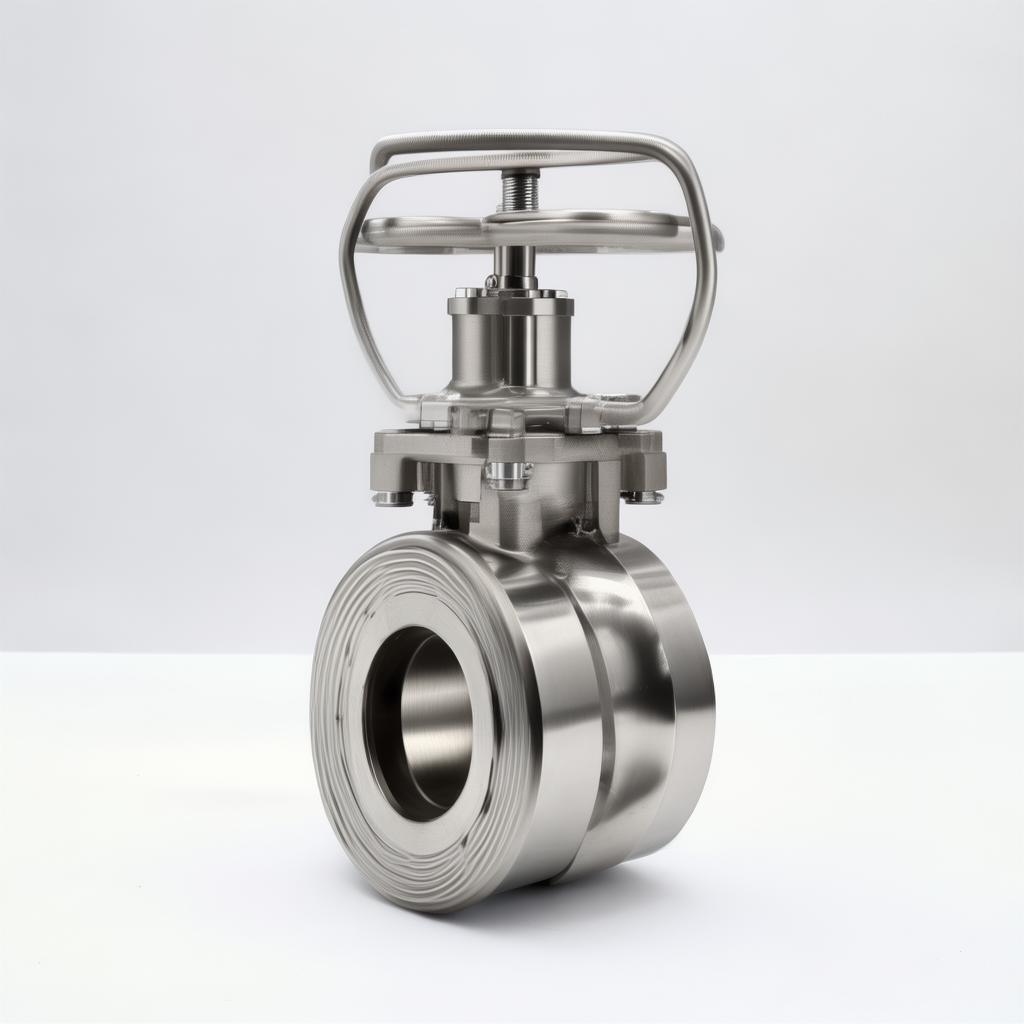
The High Cost of Inaccurate Natural Gas Regulator Sizing
For procurement managers and technical directors across the USA, the challenge isn't just finding a supplier—it's ensuring the entire gas train, from the regulator to the downstream valves, operates flawlessly under varying loads. An incorrectly sized regulator can lead to crippling operational issues:
Pressure Fluctuations & Equipment Damage: Oversized regulators cause instability (hunting), leading to premature wear of downstream control valves and burners.
System Inefficiency: Undersized regulators create excessive pressure drop (droop), starving equipment and resulting in a 37% drop in thermal efficiency.
Safety Risks & Compliance Failures: Non-compliance with ANSI B16.33 or NFPA 54 exposes your operation to fines and hazardous blowouts.
Supply Chain Headaches: High global shipping costs, long lead times, and inconsistent quality from suppliers make even the best sizing calculations useless if the valves fail.
Data from the American Gas Association indicates that improper valve selection contributes to 40% of regulator maintenance issues. You deserve better.
How to Size a Natural Gas Regulator: A Step-by-Step Technical Guide
Accurate natural gas regulator sizing hinges on four critical parameters. Thriveon's engineers use these exact steps to optimize your system.
Step 1: Gather Your System Data
You need: Inlet Pressure (P1), Outlet Pressure (P2), and Required Flow Rate (Q in SCFH). For most US industrial applications, natural gas specific gravity (G) is 0.6.
Step 2: Determine Regulator Capacity & Cv
The flow coefficient (Cv) is the valve's capacity index. A higher Cv means less pressure drop. Use the natural gas regulator sizing chart provided by manufacturers, or calculate using the formula for critical flow (when P2 < 0.5 * P1).
Step 3: Account for Downstream Valve Pressure Drops
This is where most engineers fail. Your isolation valves (ball valves, butterfly valves), strainers, and check valves all create resistance. A reduced-port ball valve can add a 5-10 PSIG drop, altering your regulator's performance. Thriveon provides full-port ball valves (Cv up to 12,000+) to minimize this.
Step 4: Select the Right Valve Type
Direct-Operated Regulators: Best for low-flow, constant pressure applications. Paired with Thriveon's flanged globe valves for precise downstream trimming.
Pilot-Operated Regulators: Ideal for high-flow, variable demand. Use Thriveon's resilient-seated butterfly valves for cost-effective isolation and throttling upstream.
Technical Specifications: Regulator Sizing Data at a Glance
Critical Role of Supporting Valves in Natural Gas Regulator Sizing
Your regulator is only as good as the valves surrounding it. Here is how Thriveon's product line directly supports your natural gas regulator sizing strategy:
Isolation Valves (Ball & Butterfly Valves): A full-port ball valve flange type ensures zero flow restriction upstream. Our butterfly valves offer tight shutoff for downstream maintenance with minimal linear pressure drop.
Pressure Control (Globe Valves): Our flanged globe valves are engineered for precise throttling, allowing fine-tuned pressure control downstream of the regulator in bypass lines.
System Protection (Strainers & Check Valves): A flanged Y type strainer protects your regulator from pipeline debris. Our check valves prevent backflow, critical for dual-regulator setups.
Durability (Gate Valves): For mainline isolation, our flanged gate valves provide a straight-through flow path with zero obstruction, essential for high-pressure gas distribution.
Case Study: A midstream gas operator in Texas reduced system lockup by 22% by replacing outdated reduced-port gate valves with Thriveon's full-port flanged ball valves upstream of their main regulators. This simple valve swap optimized their existing regulator sizing.
Why Thriveon Valves Are the Preferred Choice for Natural Gas Systems
ISO 9001:2015
Certified Quality Management System. Full material traceability.
ANSI/ASME B16.34
Full compliance for US gas distribution and industrial piping.
High-Speed Delivery
Lead times 40% faster than industry average. OEM/ODM available.
"Thriveon's technical support on valve selection for our regulator stations was invaluable. We reduced our shipping costs by 15% and lead time by 40% compared to our previous supplier. Their flanged ball valves are a game changer for our system pressure stability."
— James T., Operations Manager, Midwest Energy Corp.
Trusted by leading US gas utilities, EPC contractors, and cross-border sellers. We provide complete project documentation, pressure test reports, and competitive factory-direct pricing.
Frequently Asked Questions on Natural Gas Regulator Sizing
Q1: What happens if my natural gas regulator is undersized?
An undersized regulator restricts flow, causing excessive pressure drop (droop) and starving downstream equipment. This leads to inefficient combustion, potential flameouts, and system instability. You will need to select a regulator with a higher Cv, or reduce downstream restrictions by using full-port ball valves from Thriveon.
Q2: How do isolation valves affect natural gas regulator sizing?
Valves create flow resistance. A partially open or restricted valve can cause erroneous downstream readings and regulator chatter. Always factor the pressure drop across isolation valves and strainers into your total system sizing calculation. Thriveon’s full-port ball valves offer the highest Cv in their class, minimizing this effect.
Q3: What certifications are needed for natural gas valves in the US?
For US markets, look for adherence to ANSI B16.33 (for gas distribution), NFPA 54 (National Fuel Gas Code), and ASME B16.34. Thriveon holds ISO 9001:2015 and provides material traceability and hydrostatic pressure test reports with every valve.
Q4: What is the difference between "droop" and "lockup"?
Droop is the decrease in outlet pressure as the flow rate increases. Lockup is the increase in outlet pressure above the set point when the flow reduces to zero. Proper sizing and selection of downstream valves (like Thriveon's globe valves) minimize the band between droop and lockup, ensuring stable control.
Q5: Can Thriveon provide custom valve solutions for unique regulator station layouts?
Absolutely. Our OEM/ODM capabilities allow us to manufacture flanged gate valves, globe valves, and check valves in custom materials (WCB, CF8, CF8M) and pressure ratings (Class 150 to Class 2500) to fit your specific piping configuration and regulatory requirements. Contact our engineering team.
Q6: How do high shipping costs affect my total cost of ownership for valves?
Shipping heavy industrial valves from overseas can be prohibitively expensive. Thriveon mitigates this through efficient supply chain management and consolidated container shipping. Our factory-direct pricing combined with optimized logistics often results in 30% lower landed costs compared to European or North American manufacturers.
Real Reviews from Industry Professionals
"We switched to Thriveon for our regulator station valves. The quality is outstanding, and their engineers helped us optimize our sizing calculations by providing accurate Cv data for their ball valves. Highly recommend." — Sarah L., Project Engineer, Great Lakes Gas Transmission
"Excellent support and fast shipping. We were struggling with high shipping costs from a previous supplier. Thriveon provided a complete valving solution for our natural gas line at nearly half the logistics cost." — Mike R., Supply Chain Director, Atlantic Energy Solutions
"Thriveon's butterfly valves are perfect for our isolation needs upstream of the regulator. The tight shutoff and linear flow characteristics make our system very predictable and easy to size." — David K., Plant Manager, Southwest Refining Co.
"The technical depth of Thriveon's team saved us from a major sizing error. They provided a detailed Cv analysis for their Y-type strainers and globe valves, ensuring our regulator selection was accurate. A true partner." — Dr. Alistair F., Senior Systems Engineer, NorCal Gas Infrastructure
"We needed fast delivery of high-pressure flanged gate valves for a regulator bypass line. Thriveon delivered in 3 weeks with full documentation. Amazing service and product reliability." — John M., Operations Director, Texas Industrial Gas
Get Your Free Natural Gas Regulator Sizing Audit & Valve Quotation
Stop guessing your specifications. Let Thriveon’s expert engineers validate your natural gas regulator sizing and provide the highest quality valves at factory-direct prices.
This Month: Free valve pressure drop report with every inquiry.
Visit our Contact Page | South of Huanmadian Village Town, Ningjin County, Xingtai, Hebei, China
Ethan Chen
Senior Fluid Control Engineer, Ningjin Thriveon Valve Co., Ltd.
With over 15 years of experience in industrial valve manufacturing and gas system integration, Ethan specializes in helping US and global clients solve complex fluid control challenges. He regularly publishes on gas system optimization and has helped over 200 facilities reduce costs and improve safety.


 Call us on:
+86-311-86935302
+86-311-86935302
Call us on:
+86-311-86935302
+86-311-86935302
 Email Us:
info@thriveonvalve.com
Email Us:
info@thriveonvalve.com South of Huanmadian Village Town, Ningjin County, Xingtai, Hebei Province, China