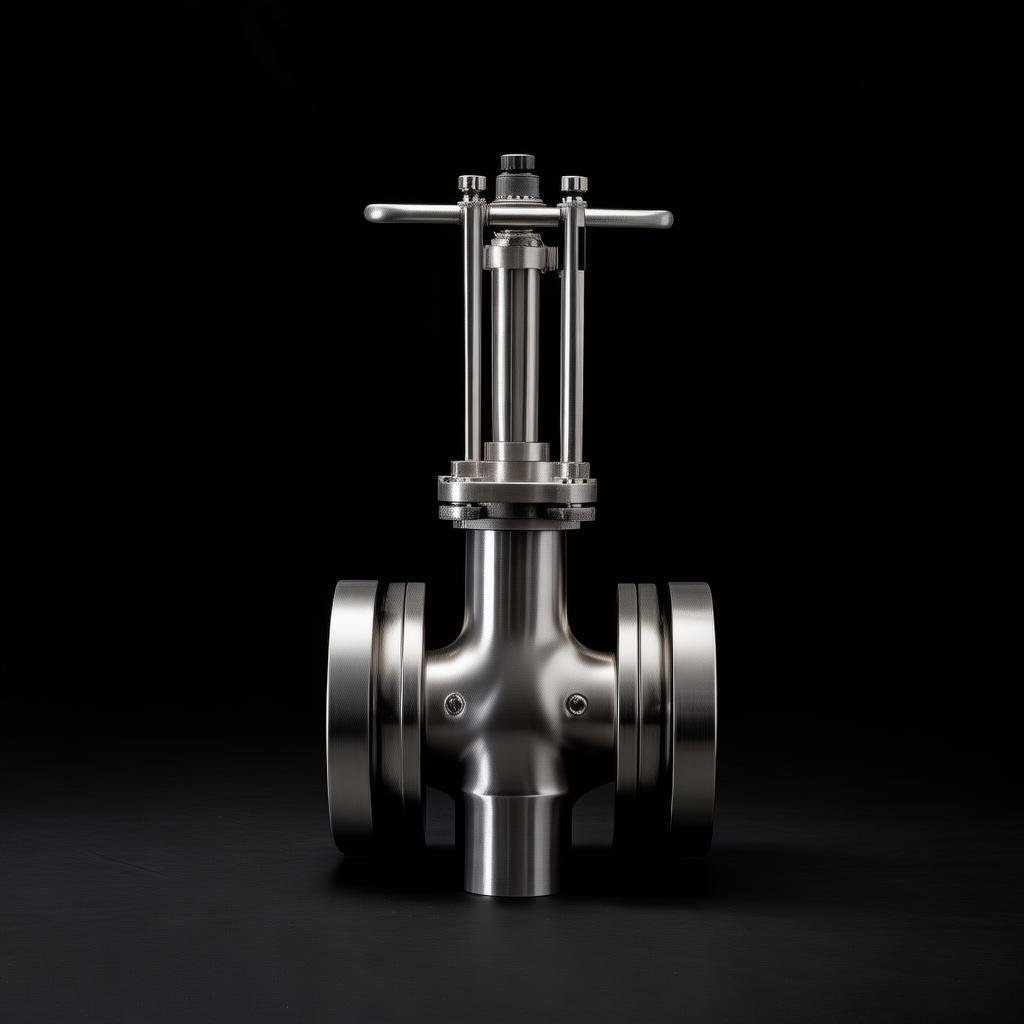
Eliminate pump priming failures and backflow — engineered for industrial water, irrigation & HVAC systems.
Get Free Sizing Consultation in 24h →✓ Free sample for qualified buyers | ISO 9001 & CE certified
Every pump operator knows the frustration: you start the system, but the pump won't draw water. Air pockets, leaking suction lines, or gravitational backflow force repeated re-priming. In industrial settings, each minute of downtime translates to $350–$1,200 in lost productivity (source: Hydraulic Institute).
→ Tell us your pump specs and we'll recommend the right foot valve free of charge.
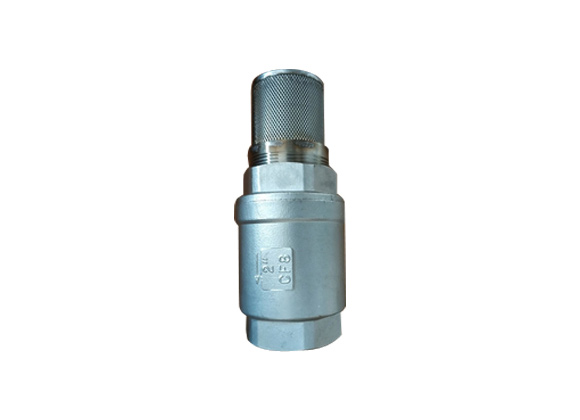
A foot valve is a specialized check valve installed at the bottom of a pump suction line. Its primary job is to keep the pump primed by preventing water from draining back into the source when the pump stops. Here is the exact operating principle:
When the pump starts, the suction lifts the disc/poppet off its seat. Water flows freely upward through the strainer screen and into the suction pipe. The valve opens fully with minimal pressure drop — typically 0.1–0.3 bar.
As soon as the pump stops, gravity and back-pressure push the disc back onto the seat. The spring (if present) accelerates closure. The valve seals zero-leakage (bubble-tight per API 598), locking the water column in the pipe.
Because the water column never drains, the pump remains primed for the next start. No air ingestion, no re-priming — just instant flow. This is the core advantage of installing a foot valve in any vertical suction application.
| Component | Material Options | Function |
|---|---|---|
| Body | Cast iron, bronze, stainless steel 316, ductile iron | Houses all internal parts; NPS 1″–12″ |
| Disc / Poppet | Brass, SS304, SS316, PTFE-coated | Seals against seat to prevent backflow |
| Seat Ring | Bronze, EPDM, Buna-N, Viton | Provides leak-tight shut-off; elastomer grades for temperature |
| Strainer Screen | SS304, SS316, galvanized steel | Filters debris > 2 mm; protects pump from solids |
| Spring (optional) | SS302, SS316 | Assists rapid closure for vertical or low-flow installations |
Key operating parameters: Max working pressure 16 bar (232 psi), temperature range -20 °C to 180 °C, suitable for water, oil, and mild chemicals.
→ Download our foot valve technical datasheet (PDF) with full dimensions & CV curves.
Based on 10+ years of supplying to the US, Saudi Arabia, South Africa, and Italy, our foot valves are engineered for repeatable sealing, corrosion resistance, and easy maintenance.
| Industry | Valve Type | Key Feature |
|---|---|---|
| Irrigation & Agriculture | Cast iron foot valve with SS screen | Cost-effective, high flow (CV ≥ 28) |
| Water & Wastewater | Bronze or ductile iron, EPDM seat | Corrosion resistant, non-toxic lining |
| Oil & Chemical | SS316, Viton seat, spring-loaded | Chemical resistance, high-temp sealing |
| HVAC & Cooling Towers | Bronze foot valve, low-pressure drop | Compact, easy inline inspection |
→ Request a custom foot valve quote — we engineer to your pump curve.

"We replaced 40+ imported foot valves with Thriveon's custom units. Priming failures dropped from 3 per week to zero in 6 months. Their strainer design handles our sandy water perfectly."

"Zero-leakage sealing and full traceability with mill certificates. Thriveon's foot valves helped us pass API inspection on first attempt. Lead time was 18 days — half of our previous supplier."

"We needed a special Viton seat for a chemical dosing application. Thriveon delivered 10 units with full EN 10204 3.1 certification. Perfect fit and performance for 18 months and counting."

"Good quality bronze foot valves at 30% lower cost than European equivalents. Rapid WhatsApp support and on-time delivery to Dubai. Will order again."
Certifications: ISO 9001 CE RoHS API 598 tested SGS inspection FCC (material compliance) CB (pump compatibility)
how does a foot valve work how foot valve works how does foot valve work
The foot valve uses a spring-loaded disc or a gravity poppet that seals the suction pipe when the pump stops. Water cannot drain back into the source, so the pump remains full of liquid and primed for the next start.
A foot valve is a specific type of check valve that includes an integrated strainer screen and is installed at the bottom of a pump suction line. Its purpose is priming retention plus debris filtration. Standard check valves (e.g., swing or wafer) don't include a strainer and are used inline.
Yes, many spring-loaded foot valves can be installed horizontally. However, vertical installation is recommended for gravity-assisted closure and optimal strainer coverage. Always check the manufacturer's orientation guidelines.
Match the foot valve size to your pump suction pipe diameter (NPS). Oversizing can cause priming issues; undersizing increases pressure drop. For flows above 200 GPM, consult the CV chart. Thriveon offers free sizing assistance via email or phone.
Absolutely. We provide custom flanges (ANSI, DIN, JIS), special elastomers (EPDM, Viton, PTFE), and coatings (epoxy, nylon). Minimum order quantity is 10 units for OEM specifications. Contact our engineering team with your drawings.
With proper material selection and regular cleaning of the strainer, industrial foot valves last 5–12 years. Elastomer seats may require replacement after 3–5 years depending on temperature and chemical exposure.
Yes, we export daily to the US via DDP terms (delivered duty paid) — no hidden costs. Air freight: 5–8 days; sea freight: 20–25 days. All valves comply with ANSI standards and include ASTM material certificates upon request.
Free sample for qualified procurement teams • 24h quotation • OEM support • ISO 9001 & CE certified
Call us: +86-311-86935302 | South of Huanmadian Village Town, Ningjin County, Xingtai, Hebei, China

© 2026 Ningjin Thriveon Valve Co., Ltd. All rights reserved. | Contact | Privacy Policy. Information provided is for engineering reference; always validate with your system conditions.
Related Products
 Call us on:
+86-311-86935302
+86-311-86935302
Call us on:
+86-311-86935302
+86-311-86935302
 Email Us:
info@thriveonvalve.com
Email Us:
info@thriveonvalve.com South of Huanmadian Village Town, Ningjin County, Xingtai, Hebei Province, China