
Lug Type Butterfly Valve MOQ and Lead Time Procurement Guide
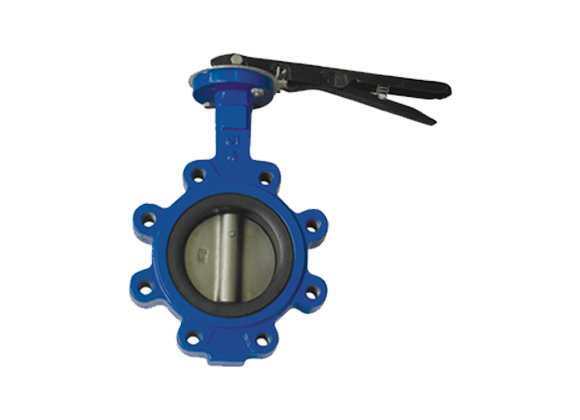
Synchronizing industrial valve manufacturing schedules with strict project completion dates requires rigorous planning across sizing, material selection, and batch structures. Industrial procurement managers and EPC directors frequently encounter scheduling bottlenecks when procurement parameters fail to account for heavy-section casting constraints and raw material lead times.
Valve sizing spans from 1½″ to 48″ (DN50 to DN1200), directly governing the baseline production timeline. Material choices for bodies and seats dictate raw material availability before machining even begins. Bridging these variables with on-site installation milestones prevents costly project delays.
How 1½″ to 48″ Sizing Imposes Heavy-Section Manufacturing Constraints
Dimensional Ranges from 1½″ to 48″ (DN50–DN1200)
Lug Type Butterfly Valve dimensions span continuously from 1½″ to 48″, expressed in metric terms as DN50 through DN1200. This wide dimensional scope dictates the foundational allocation of foundry hours and machining capacity across production runs.
Foundry cooling rates and mold preparation times scale directly with physical size tiers. Larger castings demand extended solidification cycles before machining can even begin.
Heavy-Section Casting and Machining Bottlenecks
Precision machining for sizes approaching the upper end of the 48″ limit requires specialized CNC boring and milling centers capable of maintaining tight tolerances on expansive sealing faces. Dimensional scaling directly increases cycle times per unit compared to standard DN50 production runs.
Operational planning must account for these mechanical bottlenecks to prevent downstream assembly delays. Factoring dimensional scaling into overall project timelines allows EPC directors to synchronize valve deliveries with site installation phases.
Body and Seat Material Combinations That Dictate Raw Material Lead Times
Metallurgical Pathways and Elastomer Curing Parameters
Raw material availability and lead time differentiation for industrial valves are directly determined by specific metallurgical and elastomer choices. Body material selections including Cast Iron, Ductile Cast Iron, Stainless Steel, Carbon Steel, and AL-Bronze dictate foundational foundry schedules before any machining operations begin. Similarly, seat material configurations introduce distinct curing, bonding, and sourcing parameters that influence overall factory throughput.
Procuring raw castings for bodies requires distinct sourcing timelines depending on the alloy selected. Standard ferrous options such as Cast Iron and Ductile Cast Iron generally maintain established foundry schedules. Conversely, corrosion-resistant and specialty metal selections including Stainless Steel, Carbon Steel, and AL-Bronze involve variable raw material procurement windows that dictate initial production queuing.
Elastomer Sourcing and Component Preparation Cycles
Elastomer and polymer components follow separate supply pathways that run parallel to metal body casting. Seat variations exhibit distinct vulcanization and molding lead times. Elastomeric seats require specific compound curing and batch testing. Meanwhile, engineering plastics and specialized materials involve distinct sourcing channels that impact final valve assembly coordination.
| material | Suitability for Humid Environments | Price Tier | Required Documentation |
|---|---|---|---|
| Cast Iron | Requires external coating protection | Baseline | Available upon formal request |
| Ductile Cast Iron | Requires external coating protection | Moderate | Available upon formal request |
| Stainless Steel | High inherent corrosion resistance | Elevated | Available upon formal request |
| Carbon Steel | Requires external coating protection | Moderate | Available upon formal request |
| AL-Bronze | High inherent corrosion resistance | Elevated | Available upon formal request |
| PTFE | Specialized chemical exposure tolerance | Specialized | Available upon formal request |
| Viton | Specialized chemical exposure tolerance | Specialized | Available upon formal request |
Synchronizing metal body production with elastomer seat readiness prevents bottlenecking on the assembly floor. When a project demands specialized combinations such as Stainless Steel bodies paired with PTFE or Viton seats, total production cycles expand to accommodate both alloy casting and polymer component preparation. Procurement teams evaluating valve lead times must assess these parallel material tracks to prevent uncoordinated deliveries on site.
Matching Ex-Factory Lead Times with Phased Industrial Project Milestones
Synchronizing Production Milestones with Infrastructure Delivery Windows
Municipal water treatment plants and large-scale petrochemical facilities operate under strict construction timelines that require precise synchronization with factory output. Fluid control assets must clear quality checks just as pipeline sections reach pressure-testing phases, preventing site congestion and storage degradation.
Phased infrastructure upgrades demand that delivery schedules match specific installation windows rather than arriving all at once. Heavy-section casting cycles and specialized machining sequences require early coordination between procurement teams and factory floor supervisors.
Managing Energy and HVAC Project Milestones Through Production Phasing
Energy installations and commercial HVAC systems involve complex piping networks where staggered deliveries protect materials from environmental exposure. Standard ex-factory lead times for Carbon Steel and Stainless Steel builds must be weighed against regional freight transit durations.
Project managers map critical path milestones against manufacturing output to ensure continuous site progress. Operational delays in upstream foundry casting directly ripple into site assembly timelines unless production buffers are established well in advance.
Verifying Minimum Order Quantities and Batch Structuring Constraints
Operational Thresholds and Batch Parameter Controls
Operational parameters governing Minimum Order Quantities depend on raw material preparation cycles, casting setup costs, and dedicated machining fixtures.
Foundries coordinate melt schedules to optimize thermal efficiency across production runs. Smaller batch quantities for specialized elastomers require specific tooling adjustments that directly increase per-unit production overhead.
Tooling Setup and Production Queue Allocation
Factory scheduling allocates machining hours based on the cumulative volume of individual valve configurations. Lower batch counts extend the proportion of setup downtime relative to active machining, shifting production priority within foundry queues.
Configuring Quantities for Specialized Valve Assemblies
Procurement teams evaluate order size thresholds against active production runs to prevent excessive unit costs caused by frequent mold changes and line clearances. Multi-size orders spanning from 1½″ to 48″ require careful alignment with foundry casting schedules.
Determining precise order quantities depends on material selection, nominal size tiers, and current factory load capacity, with exact parameters to be confirmed directly with the supplier.
Logistical Planning for Partial Shipments and Port Destination Feasibility
Destination ports directly dictate the transit schedule and multimodal handoff requirements for bulk valve consignments. Ocean freight routing to regional hubs versus inland terminals introduces distinct lead time variances that must be factored into overarching project milestones.
Staging partial shipments allows site managers to align valve deliveries with actual on-site installation readiness rather than receiving entire production runs at once. This practice reduces congestion in staging yards while keeping pace with multi-phase mechanical completion targets.
Port Infrastructure and Freight Route Variables
Geographic proximity to major shipping lanes determines whether cargo moves via direct container vessels or requires feeder vessel transshipment. Destination clearance procedures and local port handling capacities establish the final baseline window before inland trucking begins.
- Containerized shipments to coastal terminals bypass multi-port consolidation delays common in secondary maritime gateways.
- Heavy-section valve assemblies require specialized flat-rack stowing when weight and volume thresholds exceed standard container limits.
- Customs documentation timelines fluctuate depending on destination country import regulations and port authority inspection queues.
Managing Phased Delivery Milestones
Splitting large procurement orders into staged batches requires coordinating manufacturing completion dates with shipping container availability. Cargo consolidation schedules depend on whether valves are routed to water treatment facilities, petrochemical plants, or energy installations, each carrying unique site storage limits.
Risk Mitigation Strategies for Bulk Valve Procurement Schedules
Mitigation Frameworks for Industrial Procurement Discrepancies
Integrated risk management depends upon aligning manufacturing realities with project timelines before order placement. Sizing extremes, material combinations, and regional logistics dictate the parameters of potential schedule variance.
Synthesizing Production Variables into Risk Models
Combining heavy-section foundry schedules with elastomeric curing constraints requires early coordination between procurement teams and factory floor supervisors. Unanticipated shifts in water treatment, petrochemical, energy, and HVAC project milestones often stem from failing to factor raw material lead times into the initial planning phase. Evaluating these dependencies together prevents bottleneck formation during the final assembly of valves ranging across the entire size spectrum.
Managing Schedule Variance Without Fixed Calendar Assumptions
- Material availability shifts dynamically based on raw foundry allocations for stainless steel, carbon steel, and specialized alloy components.
- Factory queuing parameters fluctuate according to machining capacity allocations for large-diameter builds approaching 48 inches.
- Transit durations vary depending on regional destination port congestion and multimodal forwarding connections.
Protocols for Aligning Buyer Teams with Supplier Realities
Procurement schedules remain stable when engineering specifications match the exact manufacturing capabilities of the foundry. Establishing structured communication channels ensures that variations in batch sizing or destination port requirements are addressed prior to production commencement.
Frequently Asked Questions
Dimensions span from 1½″ up to 48″, with metric equivalents spanning DN50 through DN1200. Heavy-section casting demands extended cooling cycles in the foundry, while large-bore machining requires dedicated CNC milling setups for expansive sealing faces. Consequently, upper-tier sizes absorb more machine hours per unit than standard DN50 runs, directly shaping how factory capacity is allocated across active production queues.
Deployment spans water treatment, petrochemicals, energy, and HVAC systems. Fluid handling conditions across these environments determine whether standard elastomer seats or specific metal body configurations are specified to match operating pressures and media characteristics.
Delivery staging depends on destination port logistics, site storage capacity, and the overall volume of the purchase order. Transport coordination must align with regional transit schedules and on-site installation readiness to avoid congestion at the destination port.
Order volumes are governed by production setup thresholds, batch tooling requirements, and specific elastomer or body combinations. Non-standard configurations or specialized material pairings require dedicated machine calibration, which directly shifts the volume required to initiate a production run.
Controlling schedule variance relies on locking in material specifications early, aligning order batches with active foundry schedules, and factoring size-dependent machining times into project milestones. Reviewing destination port constraints alongside production lead times prevents downstream bottlenecks during multi-phase rollouts.
Documentation files corresponding to available certifications can be requested directly for project review and compliance verification. The exact scope of accompanying test reports depends on the specific regulatory requirements governing the destination market and the chosen valve configuration.
Conclusion
Consolidating exact bill of materials specifications for sizes ranging from DN50 through DN1200 eliminates ambiguity prior to commercial negotiation.
Buyers defining precise requirements establish an objective baseline for commercial engagement. Finalizing purchase orders depends directly on destination port capabilities and total batch volume.

 Call us on:
 Email Us:
 South of Huanmadian Village Town, Ningjin County, Xingtai, Hebei Province, China