Oct . 28, 2026 01:20
THE BUYER'S GUIDE / SELECTION
This guide helps procurement teams and engineers decide whether a PP ball valve flange end suits their system requirements. It covers the product's material properties, applicable media, pressure rating, temperature boundaries, size range, supported flange standards, and the key distinctions from metal flanged ball valves — giving buyers the criteria they need before specifying or ordering.
Medium compatibility: The PP ball valve flange end suits water, oil, gas, and certain corrosive liquids. It performs cut-off and full-flow functions only — not suitable for throttling or flow regulation. Verify PP chemical compatibility for concentrated oxidising agents or solvents.
Pressure and temperature rating: Rated at PN10 / ANSI 150 LB / JIS 10K. Not suitable for media above 100 °C despite PTFE or EPDM seat ratings — the PP body is the governing thermal constraint. Systems above PN10 or above the body temperature limit require a metal valve.
Size and flange standard: Available DN15 (½") through DN200 (8") in standard catalogue, with data shown to DN300. Flange drilling available in JIS, DIN, and ANSI patterns; buyers must match the existing pipeline's flange standard before ordering.
Installation and connection type: Flanged end configuration uses standard metal bolts and suits in-line installations requiring easy valve removal. The family also offers intubation and threaded connections for other pipeline joint types.
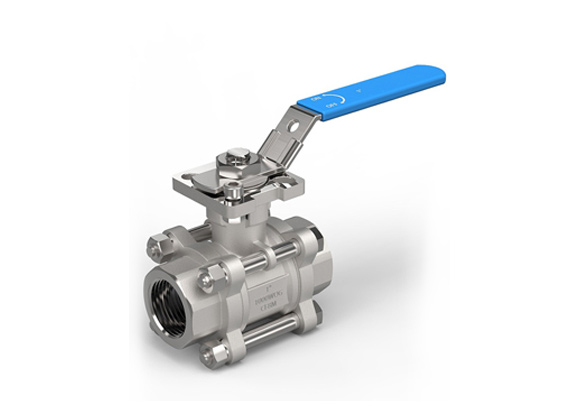
A pp ball valve flange end is a full-bore shut-off valve made from polypropylene (PP), a thermoplastic material that combines mechanical flexibility with broad chemical resistance. The body and ball are both PP, and the valve connects to the pipeline via bolted flanges on both ends. Ningjin Thriveon Valve Co., Ltd. offers this valve series covering DN15 through DN300, with flange drilling patterns available in JIS, DIN, and ANSI standards.
Because the valve body is plastic rather than metal, it fills a distinct space in a buyer's selection matrix: it is well-suited to corrosive or chemically aggressive service lines where metallic corrosion is a concern, yet it operates within specific pressure and temperature ceilings that must be verified against system conditions before specifying.
The PP ball valve flange end is rated for water, oil, gas, and certain corrosive liquids. PP's chemical resistance makes it appropriate for mild acids, alkalis, and other aggressive media that would attack carbon steel or cast-iron bodies. Buyers handling highly concentrated oxidising agents or solvents should verify PP compatibility independently before specifying.
The valve performs a cut-off and flow-through function only; it is not designed for throttling or proportional flow control. If the application requires flow regulation, a different valve type should be considered.
The product is rated at PN10 (and ANSI 150 LB / JIS 10K). This is a key differentiator from metal ball valves, which can be supplied at PN10, PN16, PN25, PN40, or PN63. If your piping system operates above PN10, a PP flanged ball valve is not the appropriate choice; a metal flanged ball valve rated to the required class should be selected instead.
PP ball valves are not suitable for media above 100 °C. Two seat/seal materials are available:
| Seal Material | Temperature Range |
|---|---|
| PTFE | −10 °C to +250 °C (seat material rating; valve body PP limits apply) |
| EPDM | −20 °C to +120 °C |
Important: Although the PTFE seat is rated to +250 °C and EPDM to +120 °C, the PP body itself constrains maximum service temperature. Buyers must not exceed the PP body's thermal limit when selecting this valve. For high-temperature service, a metal body valve is the correct choice.
The PP ball valve flange end is available from DN15 (½") to DN200 (8") in standard product dimensions, with dimensional data also shown up to DN300. Flange drilling conforms to JIS, DIN, and ANSI bolt-circle and hole patterns, making it compatible with the most widely used international piping standards. Buyers should confirm the flange standard used in their existing pipework before ordering to ensure bolt-hole alignment.
The valve is fastened with standard metal bolts at both flanges — the same installation hardware used for metal flanged ball valves.
Beyond the flanged end configuration, the product family also offers intubation (socket) and threaded connections. The flanged end variant is the appropriate choice when:
Understanding where the PP flanged ball valve fits relative to its metal counterparts prevents misspecification.
| Criterion | PP Ball Valve Flange End | Metal Ball Valve (Iron / WCB / Stainless Steel) |
|---|---|---|
| Body material | Polypropylene — plastic, chemically resistant | Iron, WCB, or stainless steel — metallic |
| Max. pressure | PN10 / ANSI 150 LB / JIS 10K | PN10 up to PN63 depending on class |
| Temperature ceiling | Not suitable above 100 °C (body limit) | Higher temperature ratings available |
| Corrosion resistance | Excellent for many corrosive media | Depends on alloy; stainless steel performs well |
| Weight | Lighter (plastic body) | Heavier (metal body) |
| Flange standards | JIS, DIN, ANSI | JIS, DIN, ANSI, HG |
| Flow function | Cut-off / full flow only | Cut-off / full flow (and some models: throttling) |
| Bolt installation | Standard metal bolts | Standard metal bolts |
Based on the confirmed product description, the PP ball valve flange end offers the following functional advantages:
Procurement teams should rule out this product when:
The table below shows key flange dimensions for selected nominal diameters. Full dimensional data from DN15 to DN300 is available from Ningjin Thriveon Valve Co., Ltd. upon request.
| DN | Face-to-Face L (mm) | Flange OD D — JIS / DIN / ANSI | Bolt holes n-φ — JIS / DIN / ANSI |
|---|---|---|---|
| 15 | 60 | 95 / 70 / 65 | 4-15 / 4-14 / 4-16 |
| 25 | 80 | 115 / 90 / 85 | 4-19 / 4-14 / 4-16 |
| 50 | 120 | 160 / 120 / 125 | 4-19 / 4-18 / 4-19 |
| 80 | 152 | 195 / 150 / 160 | 8-19 / 8-18 / 4-19 |
| 100 | 190 | 215 / 175 / 180 | 8-19 / 8-18 / 8-19 |
| 150 | 240 | 280 / 240 / 240 | 8-23 / 8-23 / 8-22 |
| 200 | 298 | 335 / 295 / 295 | 12-23 / 8-23 / 8-22 |
The pp ball valve flange end from Ningjin Thriveon Valve Co., Ltd. is the correct selection when the system meets all of the following conditions:
When any one of these conditions is not met, a metal flanged ball valve or an alternative valve type should be evaluated instead. Contact Ningjin Thriveon Valve Co., Ltd. with your specific operating conditions for a formal product recommendation.
THE PEOPLE

About the author
THE COMPANY
As a leading valve supplier in Northern China, Ningjin Thriveon specializes in the production of butterfly valves, gate valves, globe valves, and check valves. We export a majority of our products to various countries, including the United States, Saudi Arabia, South Africa, and Italy. If you are looking for high-quality and durable valves, our website is an excellent resource.…
About Us ↗Visit company website ↗YOUR NEXT STEP
Use case, specification, quantity and delivery window: make the next conversation specific.
Related Products
 Call us on:
+86-311-86935302
+86-311-86935302
 Email Us:
info@thriveonvalve.com
 South of Huanmadian Village Town, Ningjin County, Xingtai, Hebei Province, China